
A crossover is fundamentally a filter designed to selectively pass or attenuate signals based on their frequency. Crossovers are primarily categorized into low-pass filters and high-pass filters, which correspond to the functions of low-cut and high-cut filters, respectively.
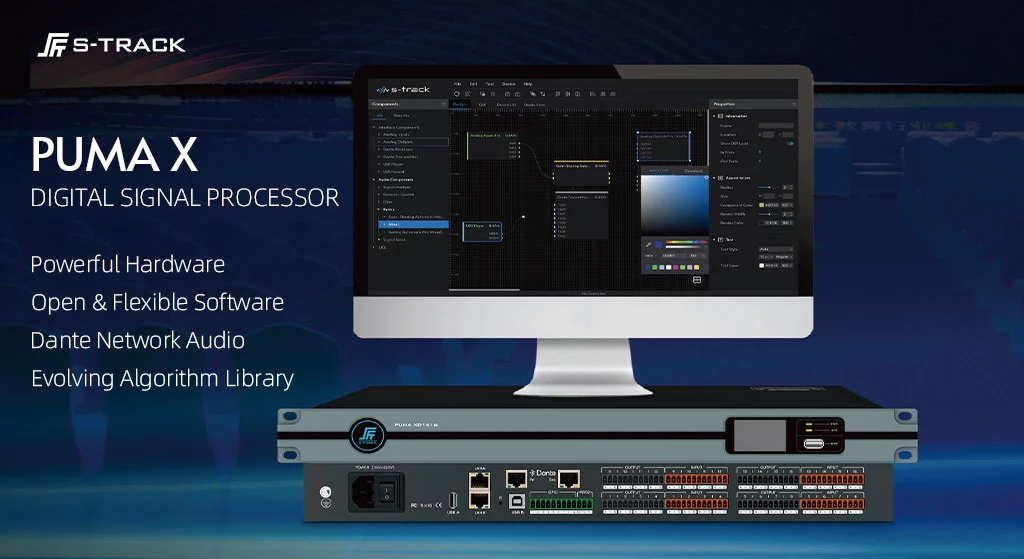
A low-pass filter allows low-frequency signals to pass through while attenuating or blocking high-frequency signals above a specified cutoff frequency. Often referred to as a high-cut filter or treble-cut filter, it is commonly used to remove high-frequency noise or unwanted high-frequency content from an audio signal. Common types of low-pass filters include the Butterworth filter.
A high-pass filter, conversely, permits high-frequency signals to pass while attenuating or blocking low-frequency signals below a specified cutoff frequency. Also known as a low-cut filter, it is frequently employed to eliminate low-frequency noise. For instance, in a conference sound reinforcement system, a high-pass filter can be applied to a microphone signal to cut low-frequency noise around 80Hz, thereby enhancing speech clarity.
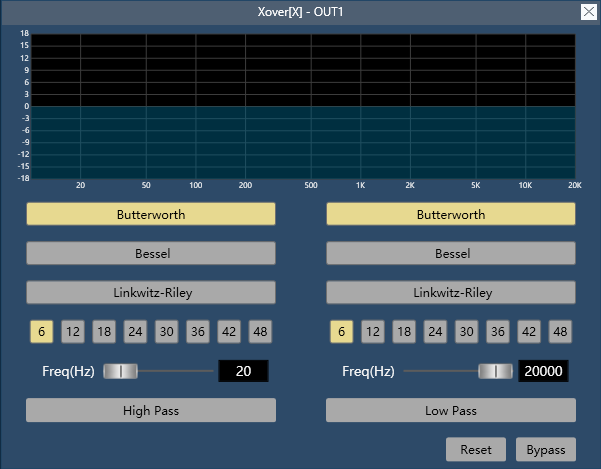
In practice, the application of crossovers depends on the performance characteristics of different frequency bands within a signal. When the low-frequency content negatively impacts the overall audio quality, a high-pass filter can be engaged to attenuate these frequencies. Conversely, when the high-frequency content is problematic, a low-pass filter can be used to reduce it. In cases where a specific frequency band performs poorly while others are satisfactory, low-pass and high-pass filters can be combined to create band-pass or band-stop filters. This allows for targeted attenuation of the problematic frequency band while preserving the integrity of other frequency bands, thus optimizing the overall audio performance.
The flexible application of crossovers significantly enhances an audio system’s sound reproduction, bringing it closer to its ideal state.
400-900-2726
الطابق التاسع، 1ب، حديقة شانغتشي للتكنولوجيا، منطقة قوانغمينغ، مدينة شنتشن، مقاطعة قوانغدونغ، الصين
حقوق الطبع والنشر © شركة شنتشن إس تراك للعلوم والتكنولوجيا المحدودة